
Straight Line vs Longarm Quilting
Once I have carefully designed and pieced your clothing items together into a quilt "top," we reach a vital step in the process: The Quilting.
What is "Quilting" and Why Does It Matter?
A quilt isn't just one layer of fabric; it’s a "sandwich." It consists of the quilt top (made from your clothing), a middle layer of batting (for warmth and loft), and a fabric backing.
"Quilting" is the stitching that runs through all three layers to hold them together. Without it, the layers would shift and the quilt wouldn't survive a wash. But beyond durability, the quilting style changes how your memories look and feel.
The Magic of the "Quilt Crinkle"
You may notice that quilts have a distinct, puckered texture after their first wash—quilters affectionately call this the "crinkle." This happens because the cotton fibers in the fabric and the batting shrink ever so slightly when washed, while the quilting stitches stay put.
This crinkle is the hallmark of a cozy, handmade quilt. It’s what gives a memory quilt that "lived-in" feel, making it perfect for snuggling on the couch.
I offer two distinct ways to finish your memory quilt. Here is how to choose the one that fits your vision.
Option 1: Straight-Line Quilting
Clean, Modern, and Understated
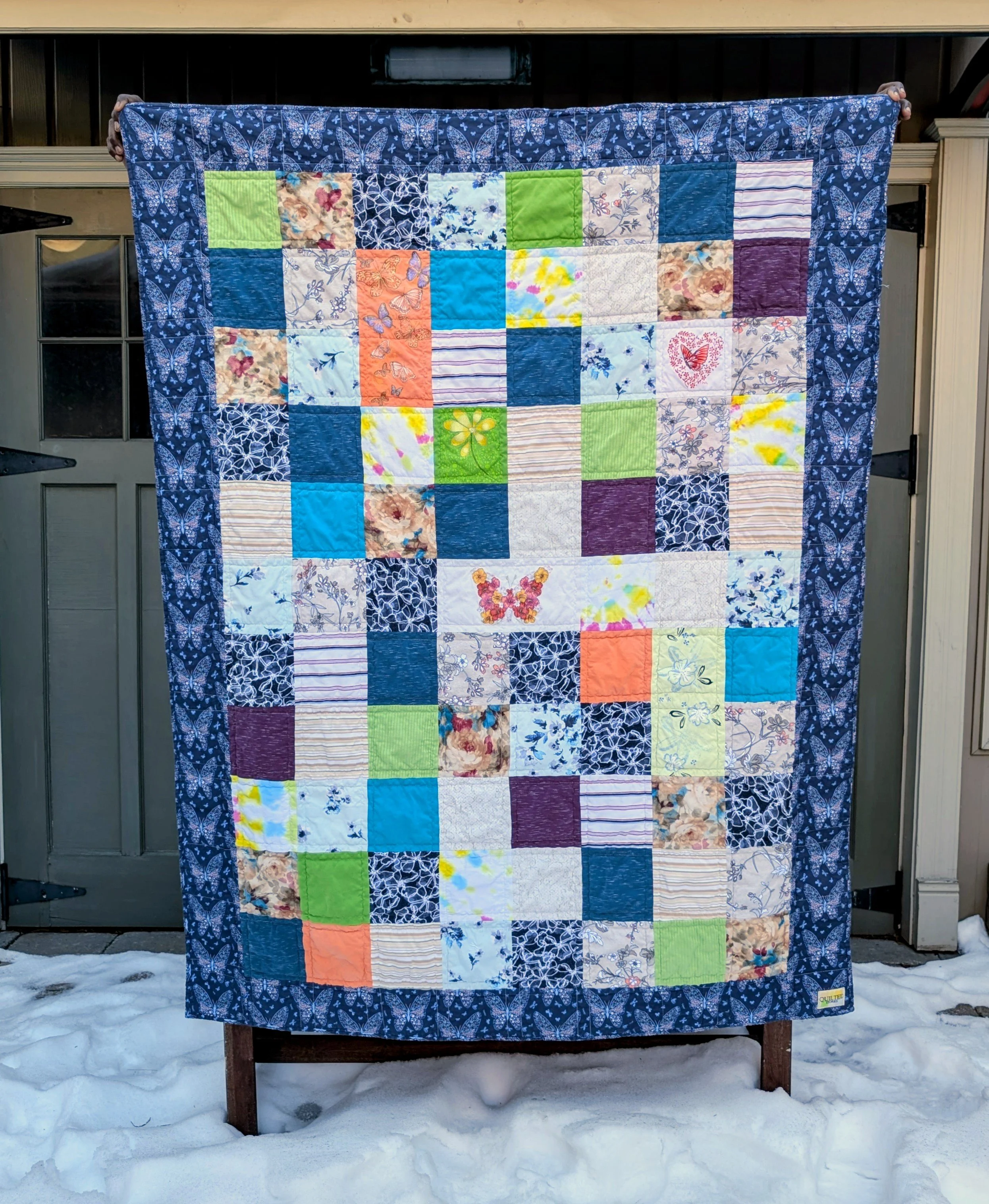
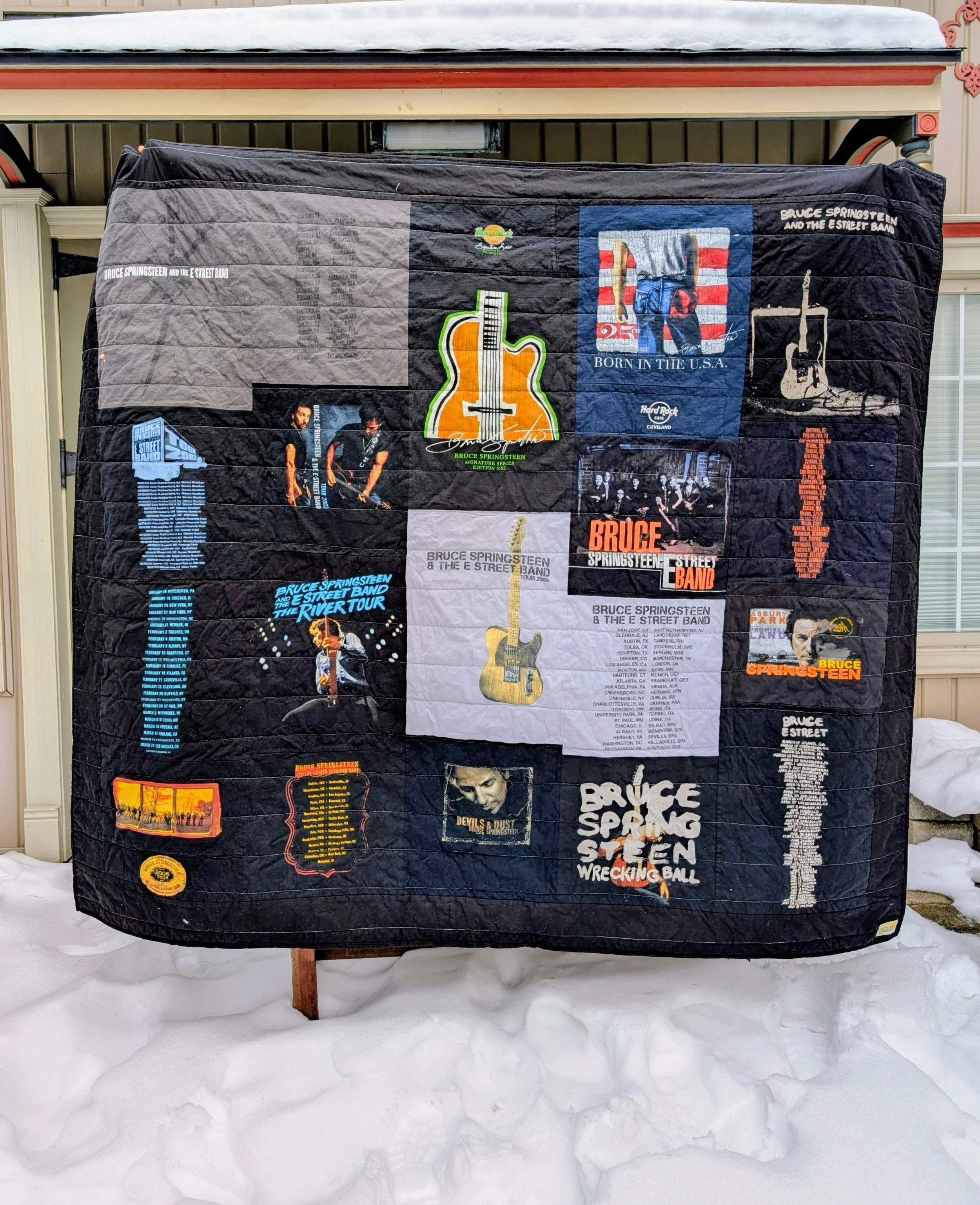
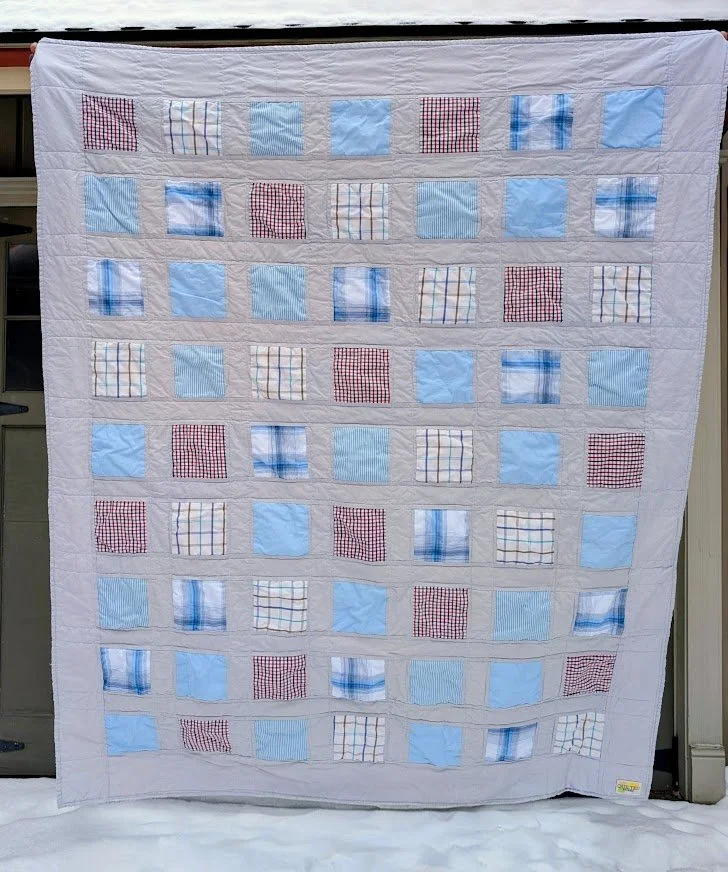
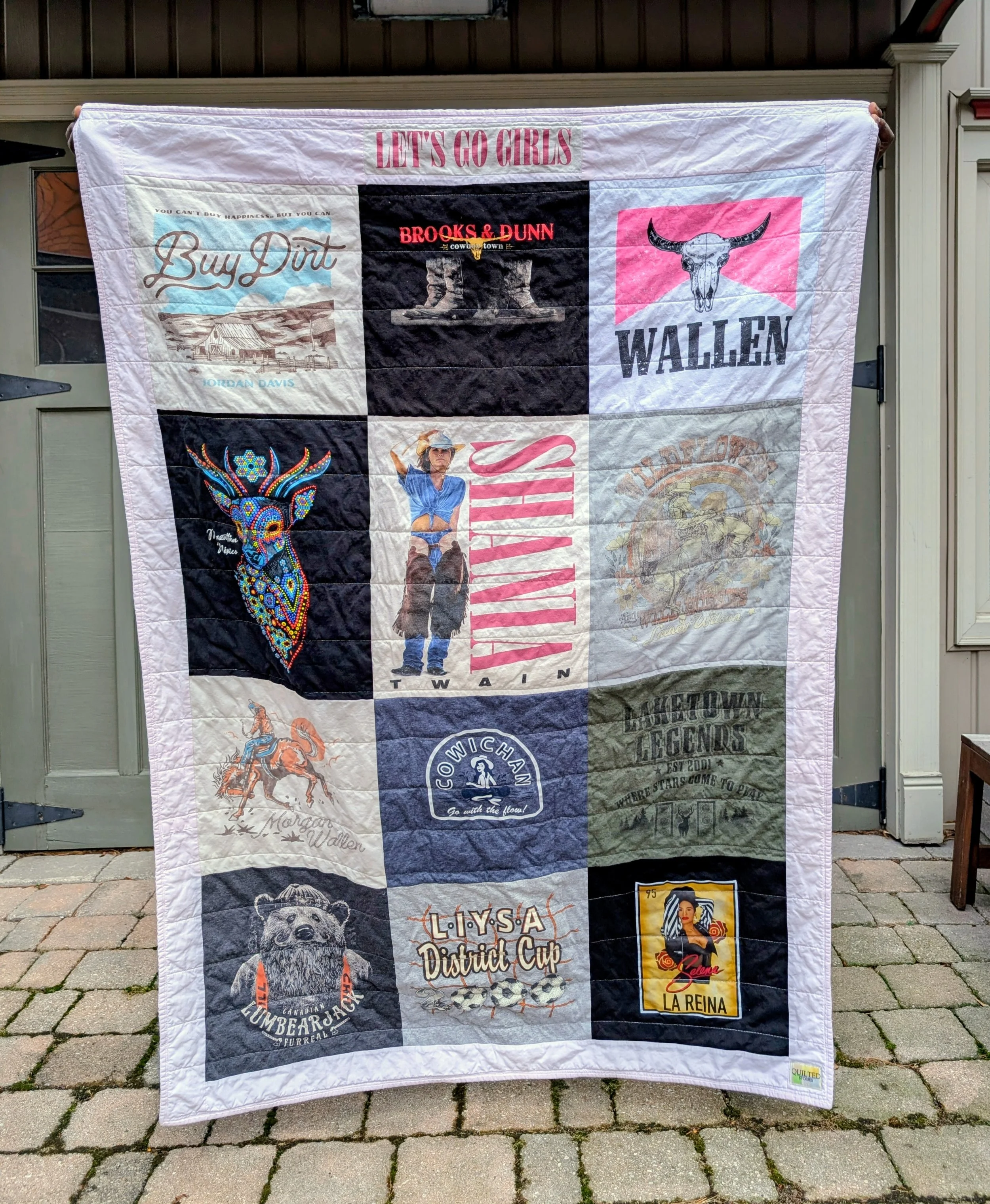
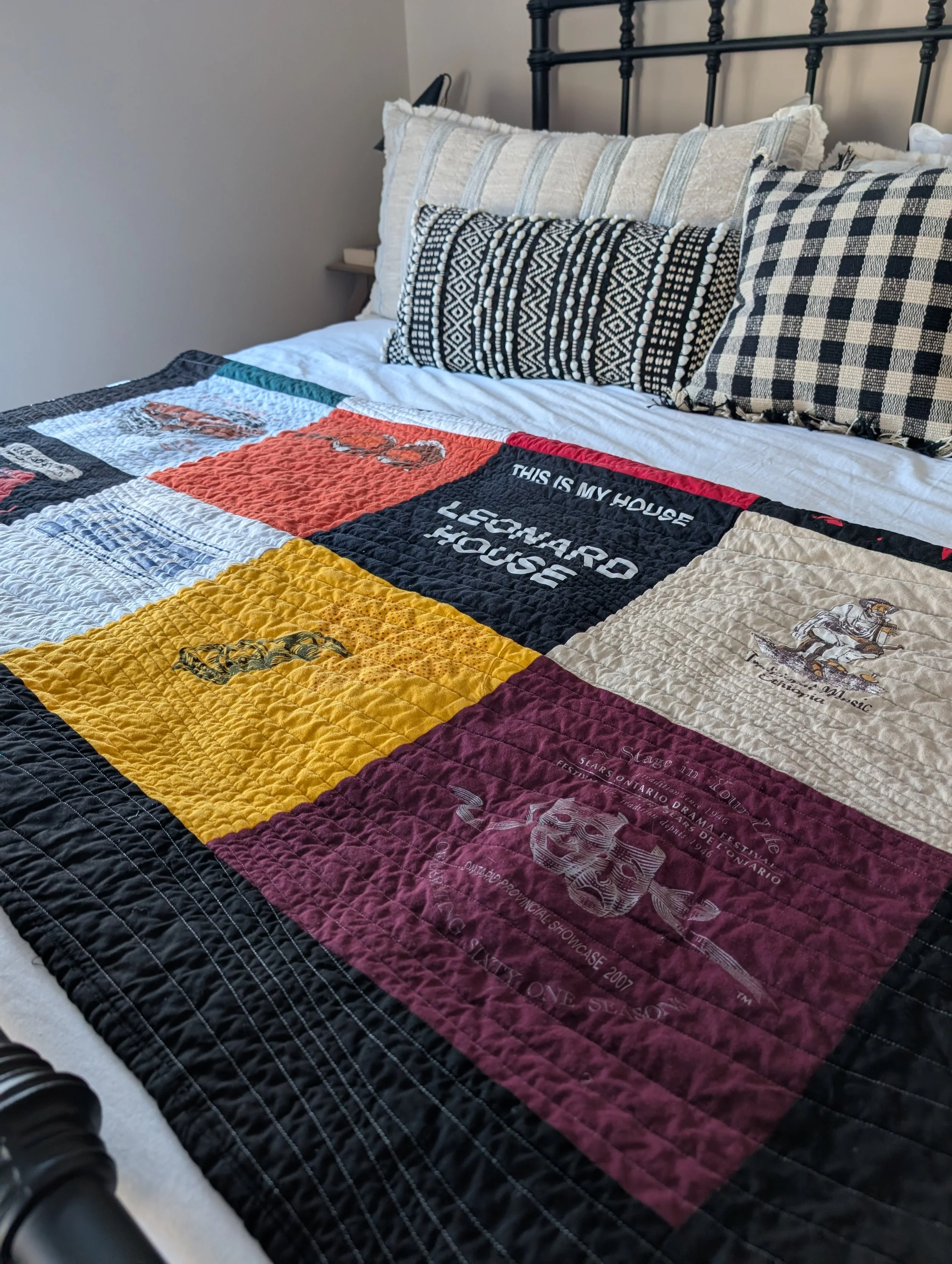
Straight-line quilting is a classic choice that lets the clothing itself remain the absolute star of the show. I perform this on a domestic sewing machine, carefully guiding the quilt to create crisp, rhythmic lines.
The Technique: I sew consistent, parallel lines across the entire quilt.
The Look: This creates a structured, minimalist aesthetic. Because memory quilts (especially T-shirt quilts) can be very "busy" with different logos and colors, straight lines provide a calming, organized frame. It also gives a more “hand-made” look.
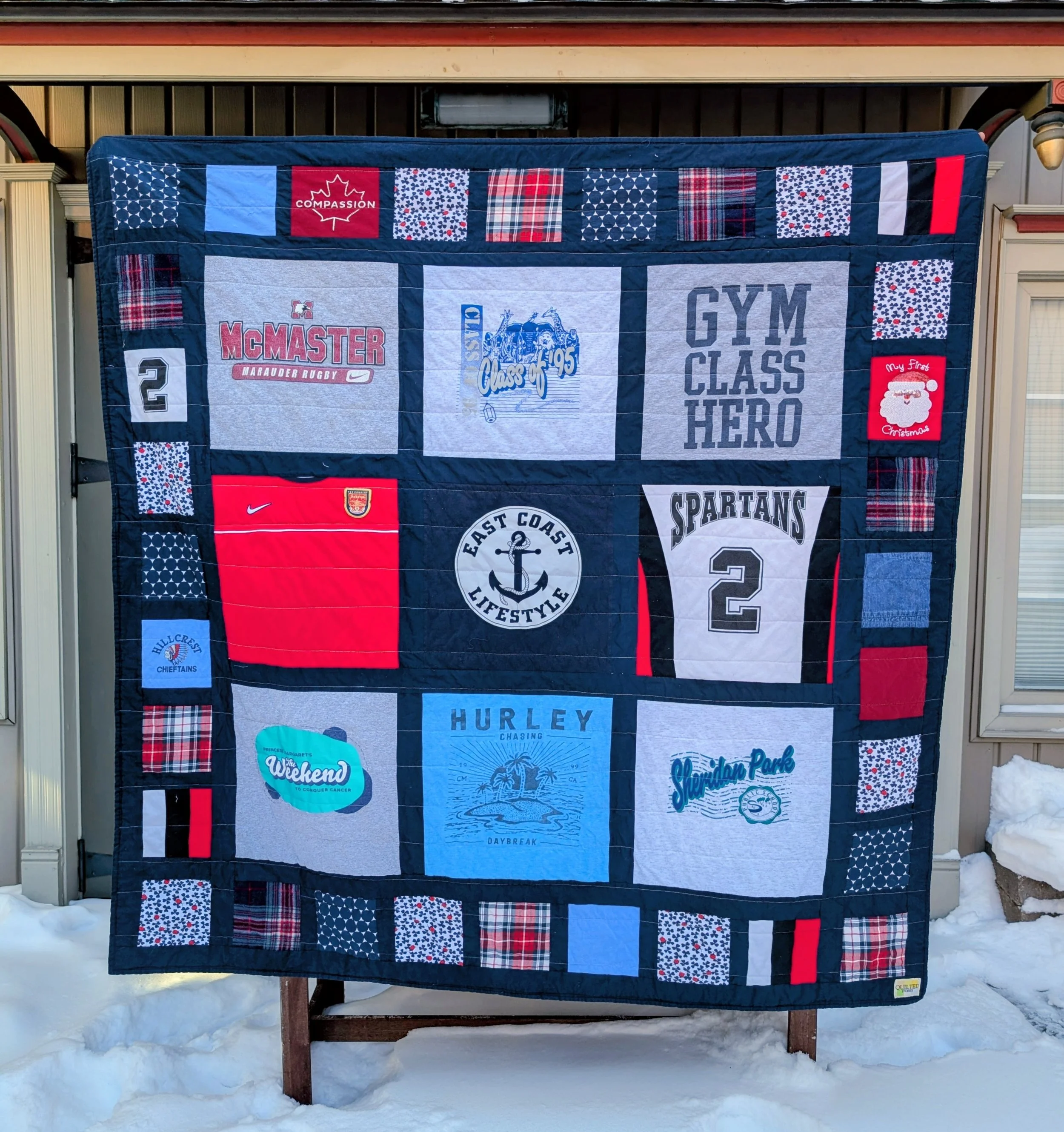
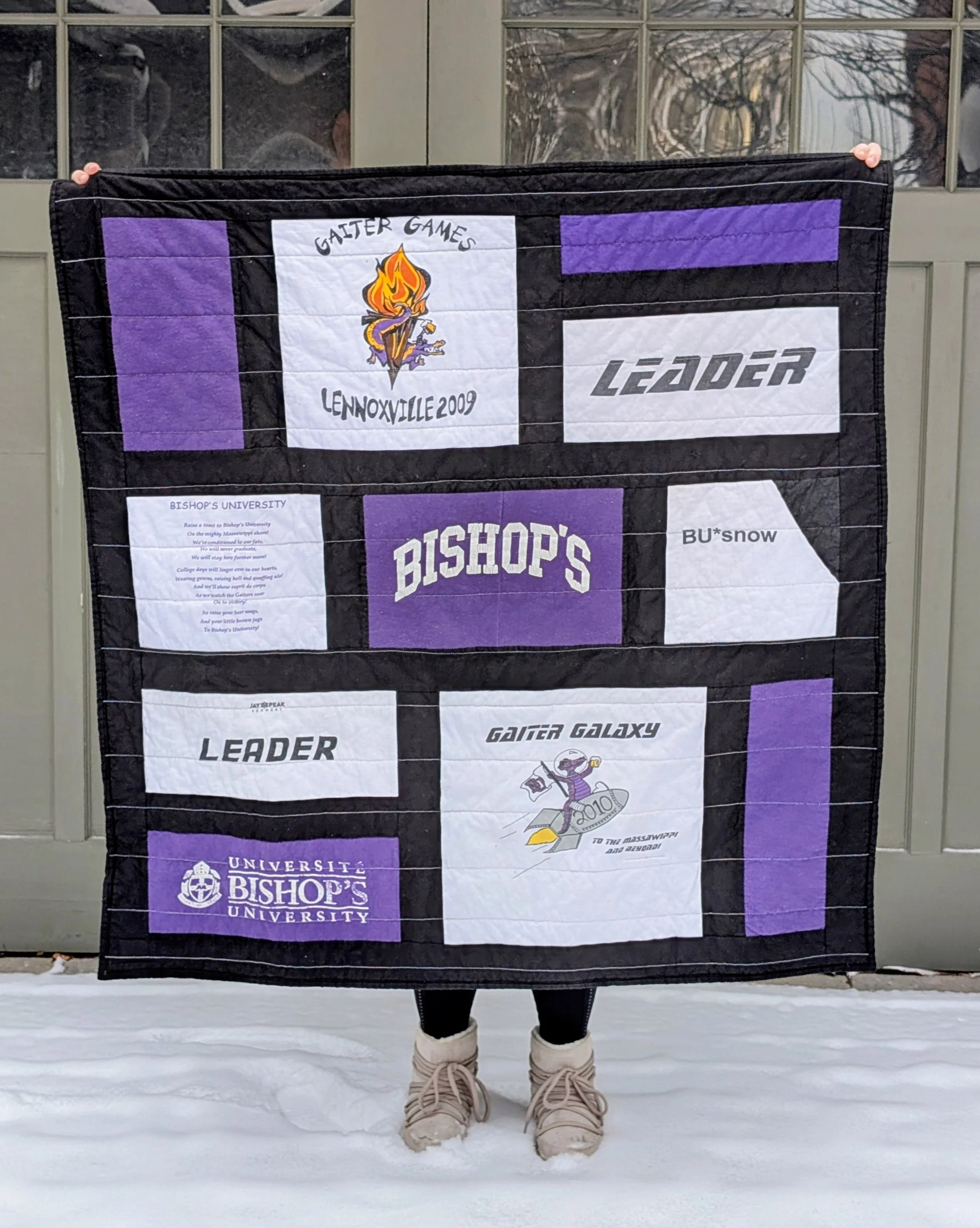
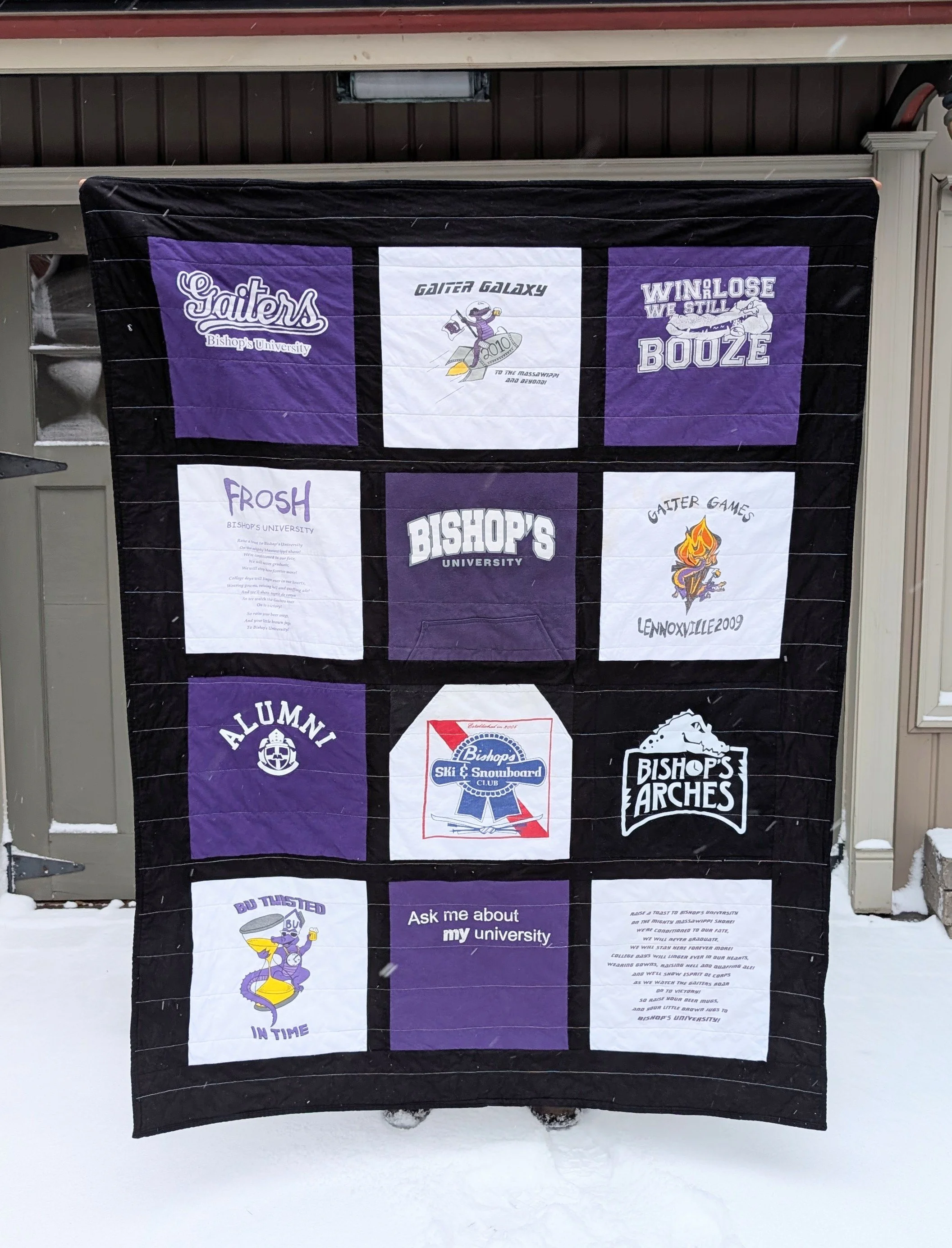
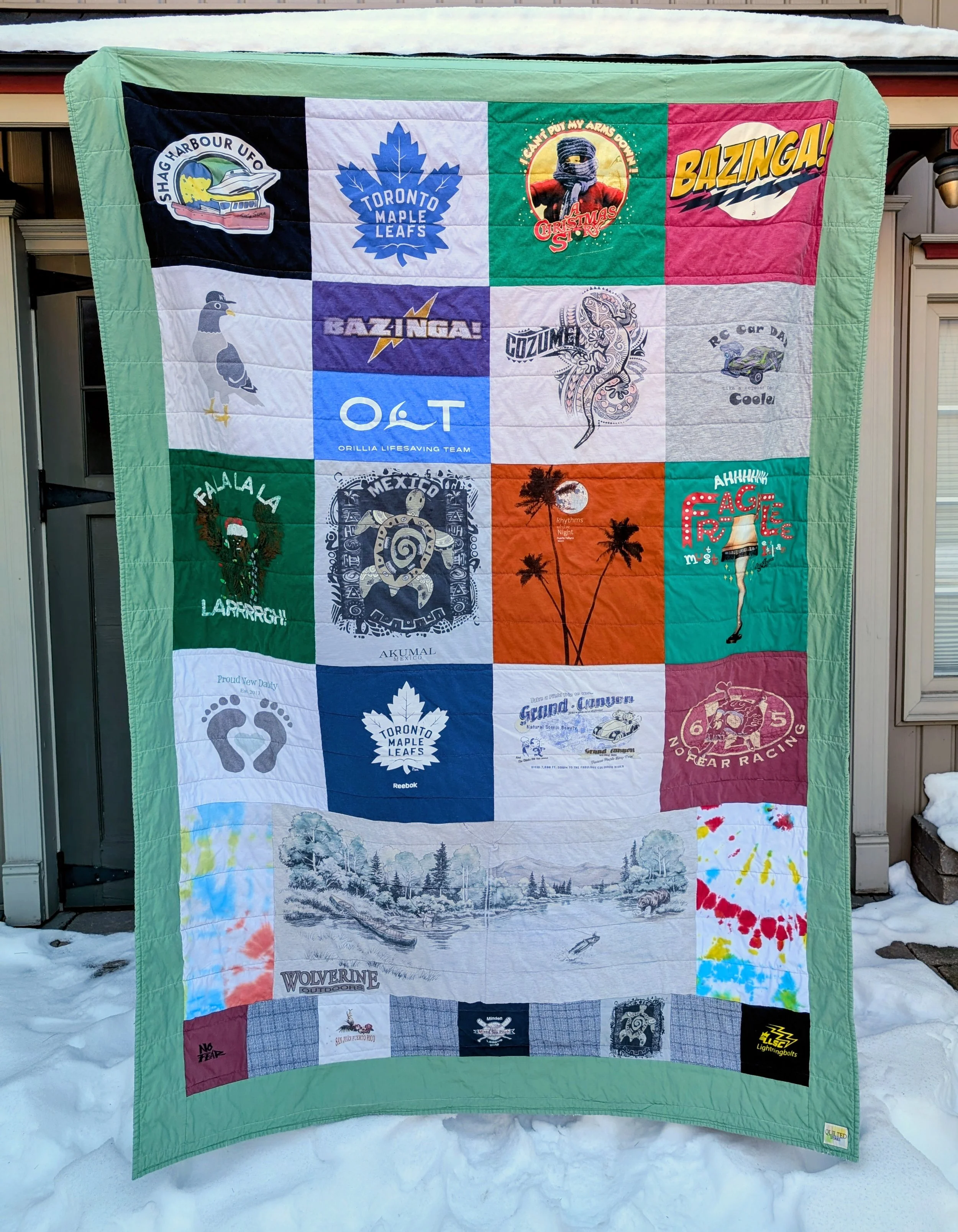
Option 2: Longarm Quilting
Fluid, Decorative, Professional
Longarm quilting uses a specialized, large-scale machine where the quilt is loaded onto a frame. This allows the needle to move in fluid, artistic patterns across your clothing items.
I do not own a longarm machine, so I send your quilt out to a local longarmer to do this step. This adds $60-$200 to the cost of your quilt.
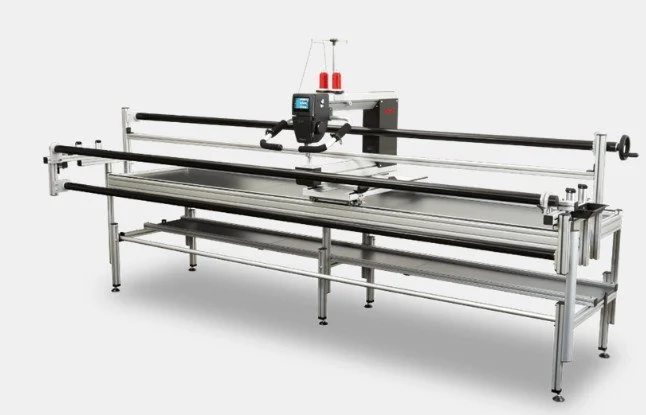
Long arm machines are quite large to accommodate up to king sized quilts!
Edge-to-Edge Designs
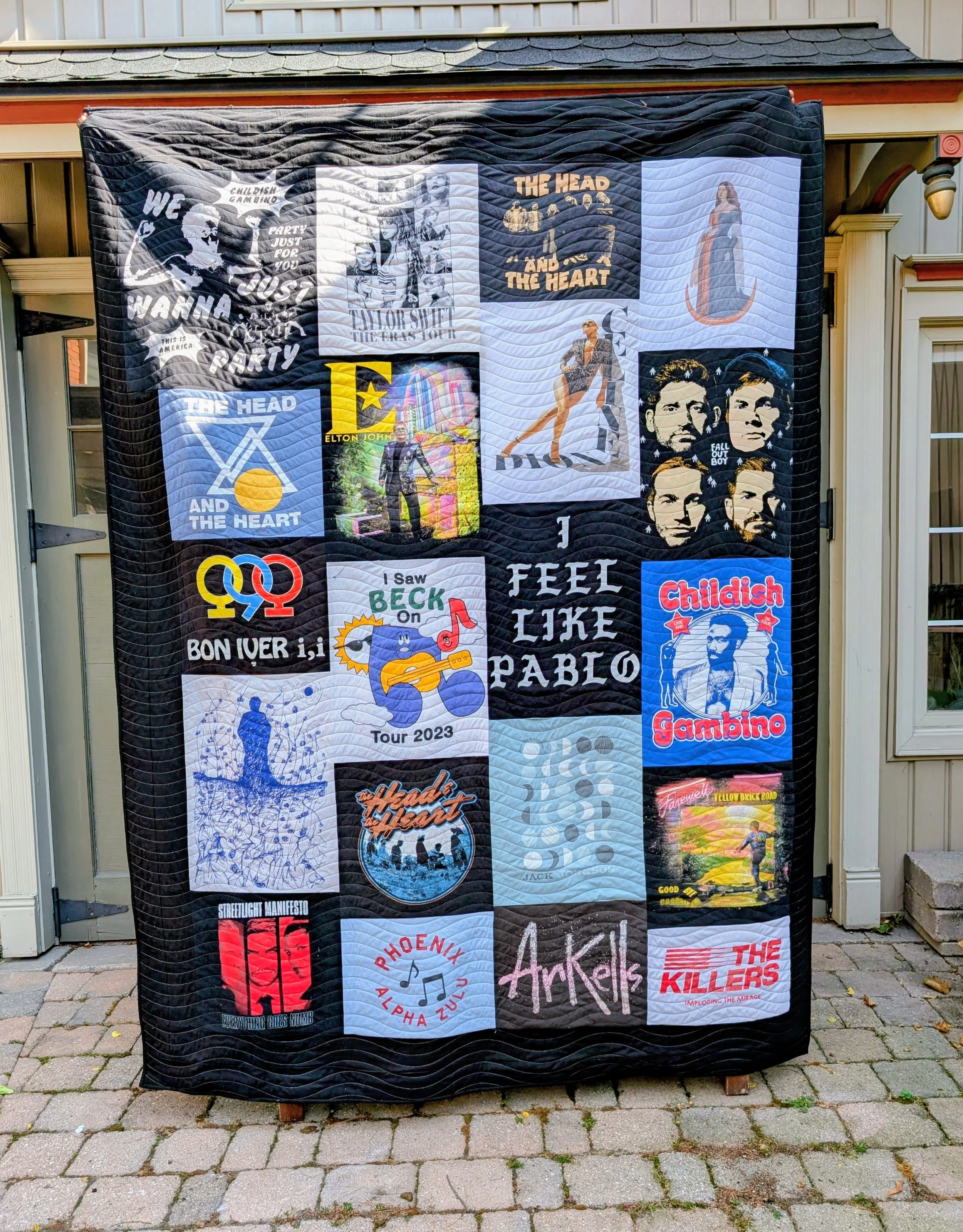
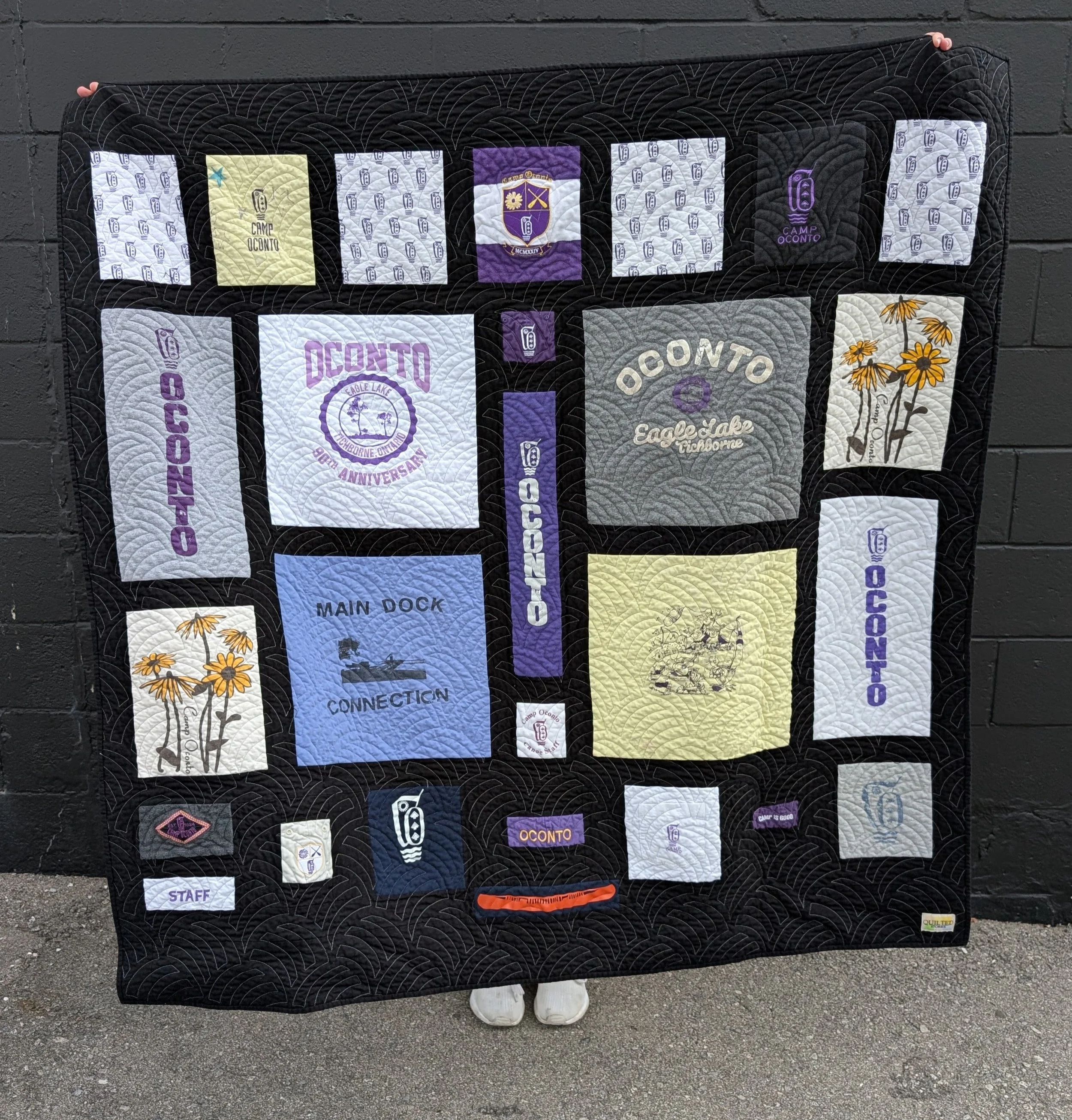
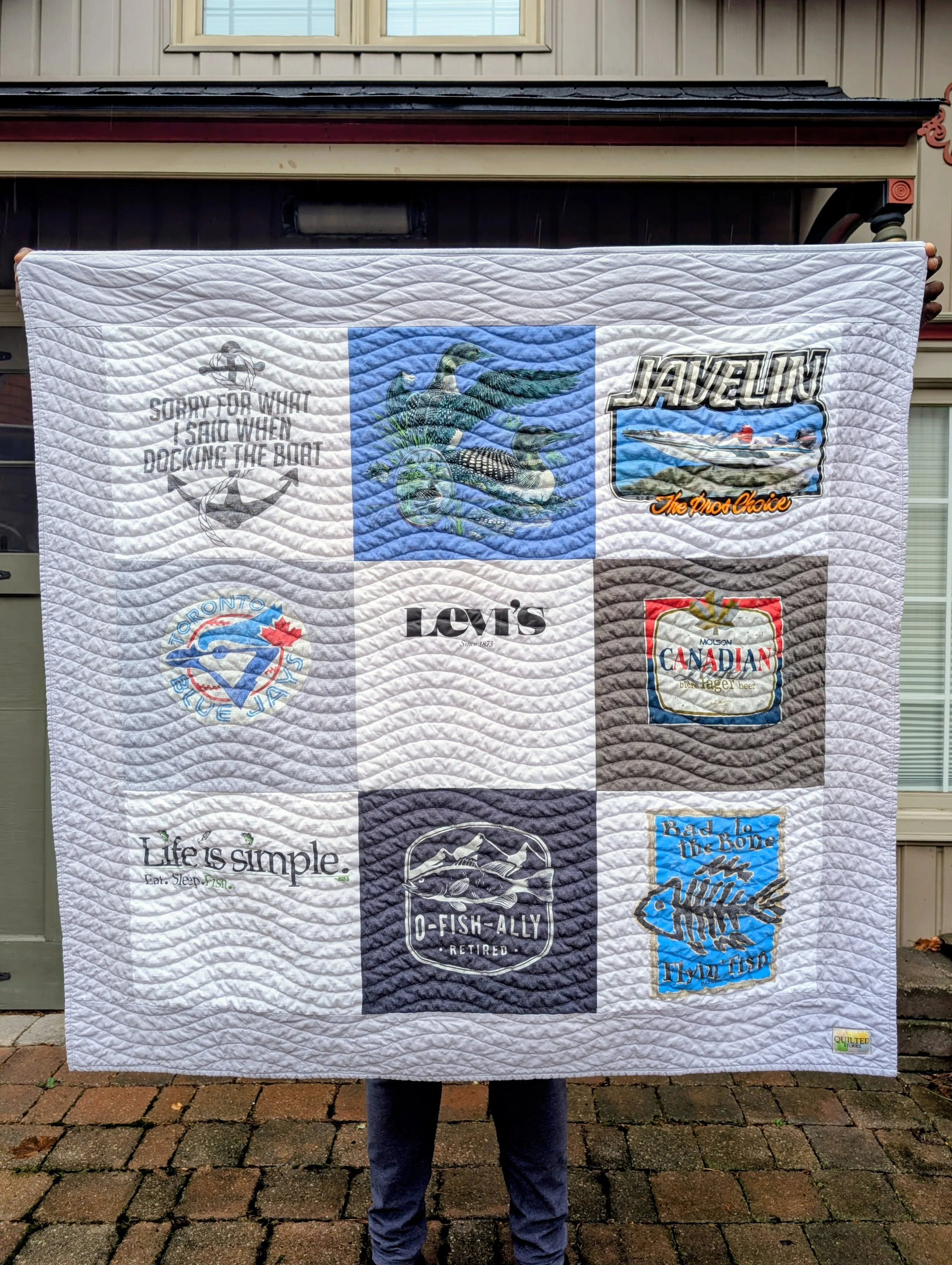
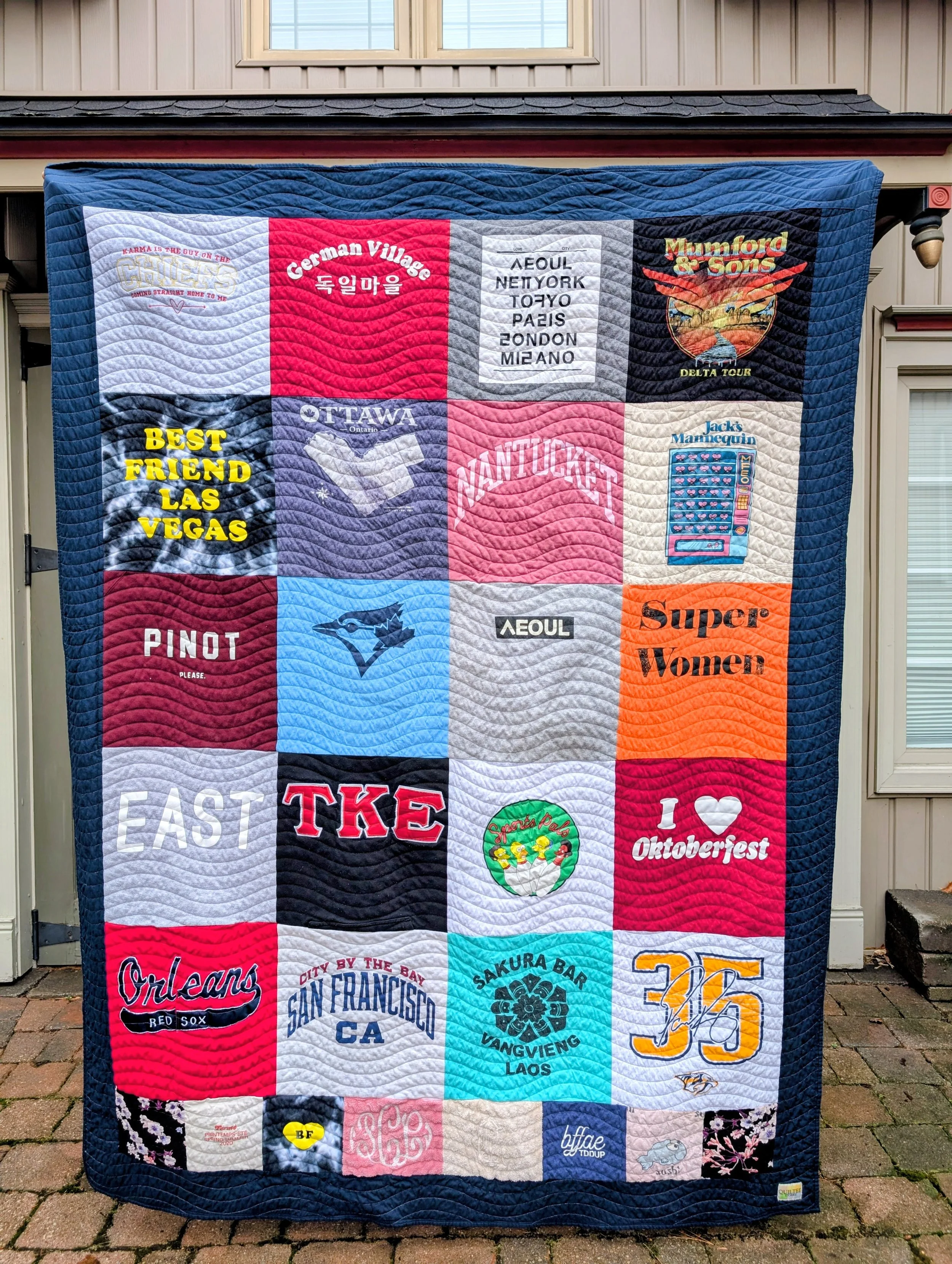
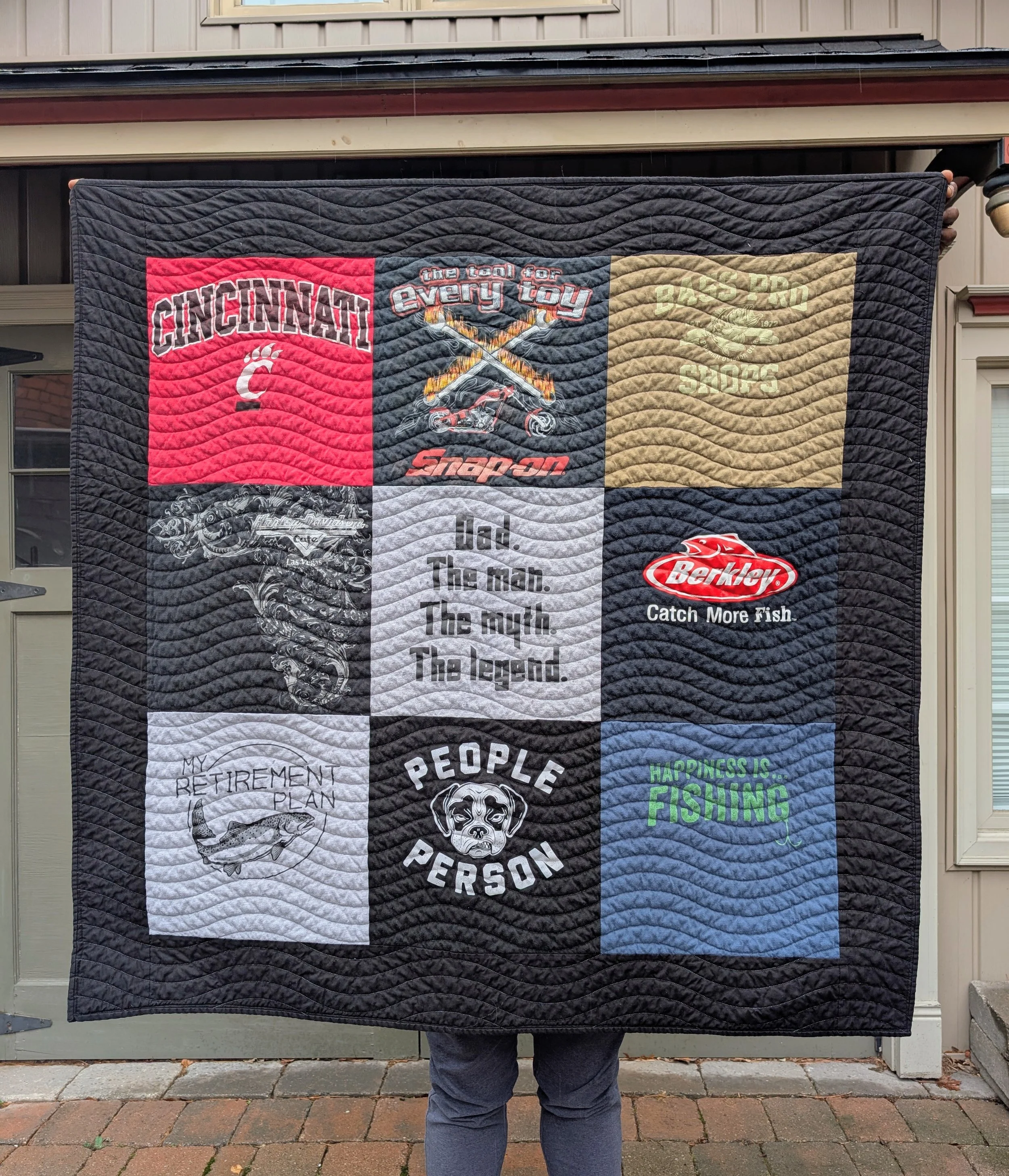
An "Edge-to-Edge" design is a continuous pattern—like swirls, stars, or floral paths—that is stitched uniformly across the entire quilt.
The Technique: A big computerized machine is programmed to "draw" a design over the surface of the quilt with the stitching
The Look: This adds a beautiful, artistic layer of texture. You can choose any pattern that matches the personality of the clothing—perhaps stars for a graduation quilt, or soft clouds for baby clothes.
In the images below you can see the consistent, even stitch patterns across the quilt. You get to choose which pattern you would like out of a large library!
Making the Final Choice
Ultimately, choosing between straight-line and longarm quilting is a very personal decision based on the "look" and "feel" you want for your memories! There is no wrong answer—both methods result in a beautiful, durable heirloom that will protect your clothing for years to come.
If you find yourself undecided, don’t worry! I am more than happy to walk you through my thinking and offer a recommendation on which style would best complement the specific clothes and colors in your quilt.
A Note on Pricing: Because the longarm service is specialized and outsourced to a professional longarm artist, it does add to the overall cost of your memory quilt. Straight-line quilting is performed in-house on my own machine and is included in my standard quilting rates. I am happy to provide a side-by-side quote for both options so you can make the choice that works best for your vision and your budget.
Ready to turn your memories into something beautiful? Contact me today to start planning your custom quilt.
