
What is a quilt?
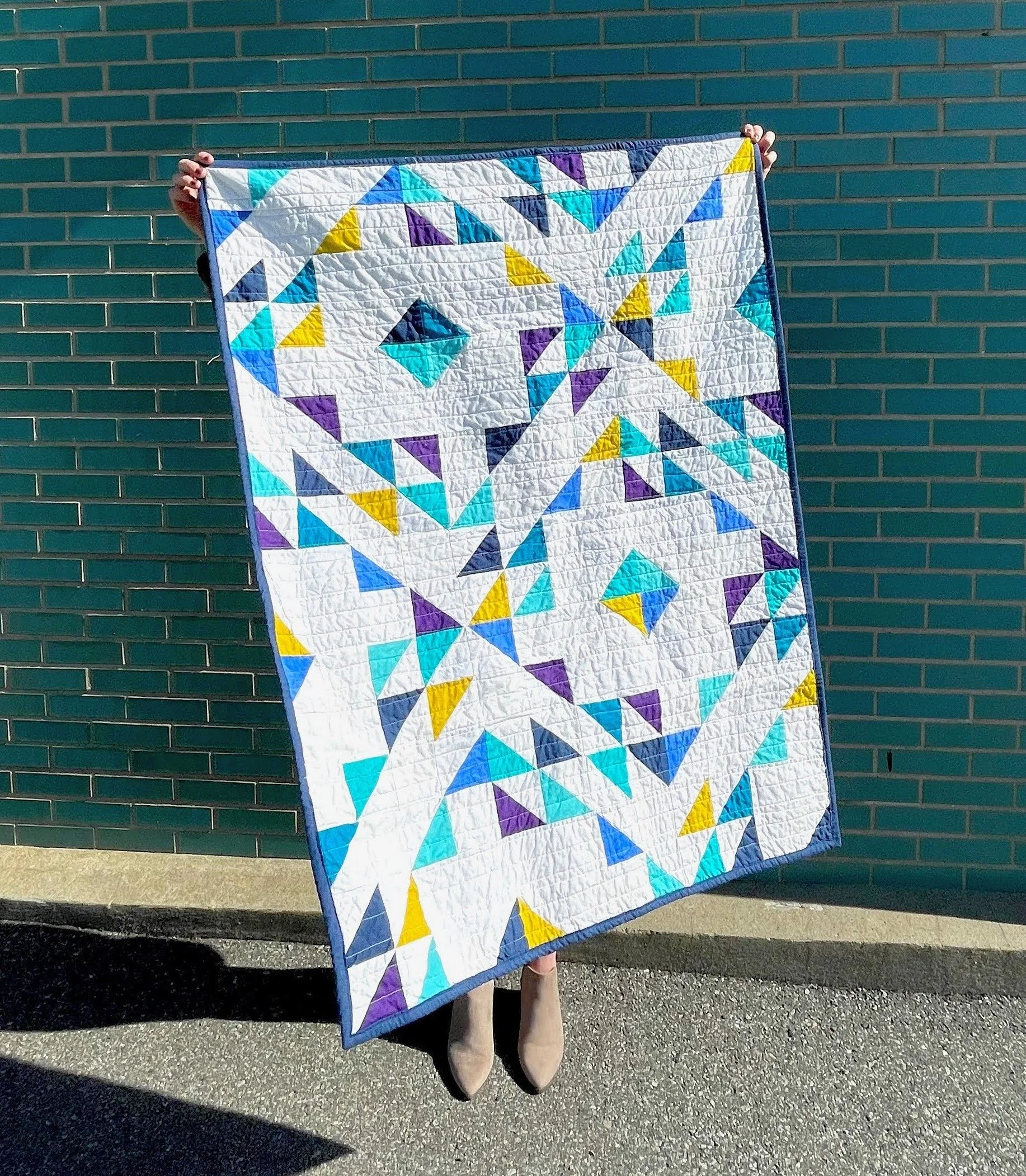
A quilt is more than just a blanket — it’s a three-layered fabric “sandwich” that’s stitched together. The top is usually made from pieces of fabric sewn into a design, or from special clothing (like T-shirts ). The middle is a soft, fluffy layer called batting, which gives the quilt warmth and coziness. The bottom is the backing, a single piece of fabric that holds it all together.
What makes a quilt unique from just being a blanket is that all three layers are stitched through- either by hand or sewing machine. Quilts are often handmade and one-of-a-kind, carrying personal meaning and lasting for generations.
The Quilt Top
Your quilt top will be made from your special pieces of apparel. We cut out the designs on the shirt, iron on interfacing (which stabilizes the fabric) and then sew together the shirts, ensuring that the layout is visually appealing.
Adding a Border
You have the option of adding a border to the outside of the quilt top.
A border makes the quilt larger and frames the shirts. With or without a border, all quilts have a binding, which is the thin strip of fabric all around the edge of the quilt, which I explain more in the next section.
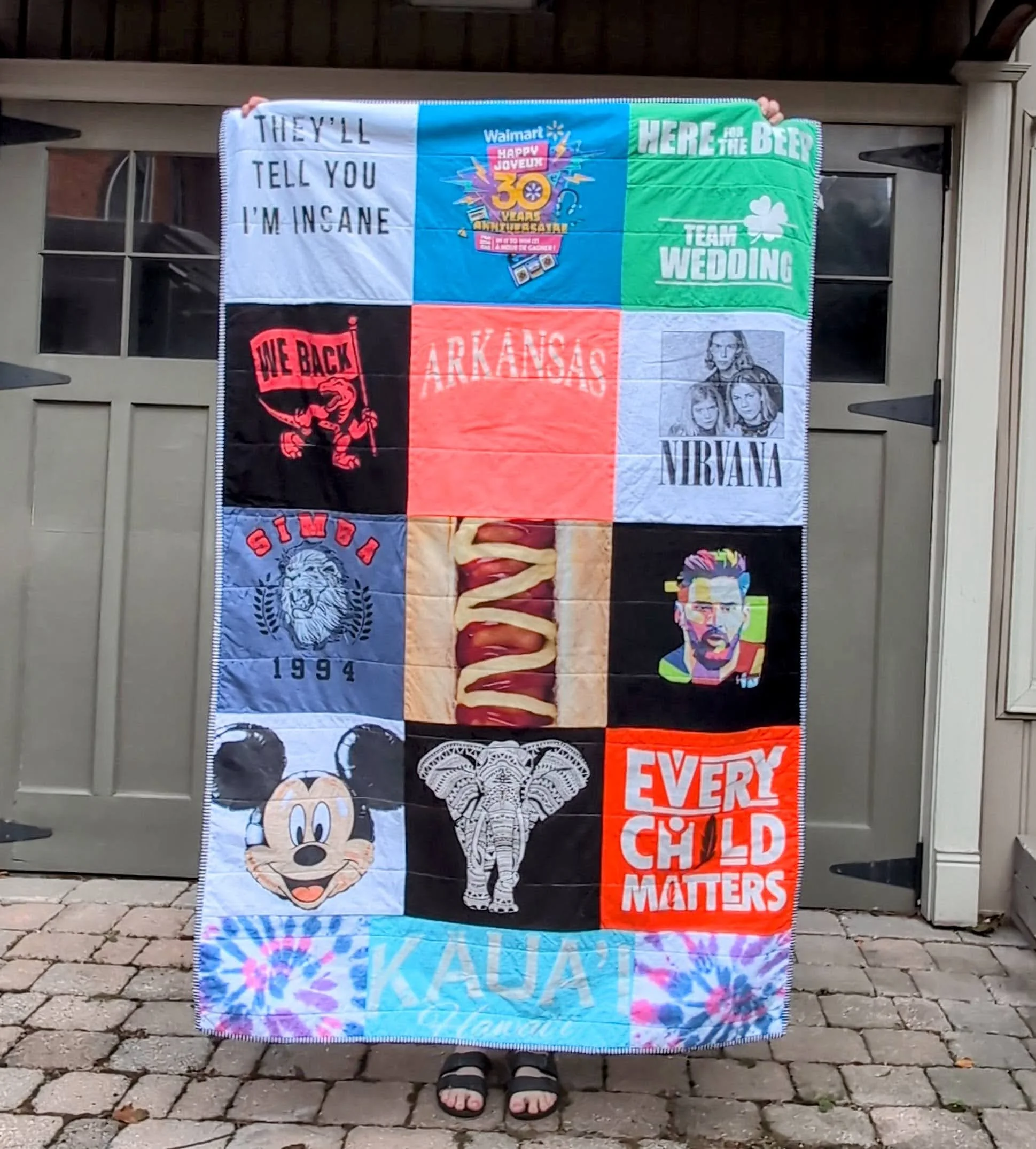
This quilt does not have a border.
It has a black and white binding
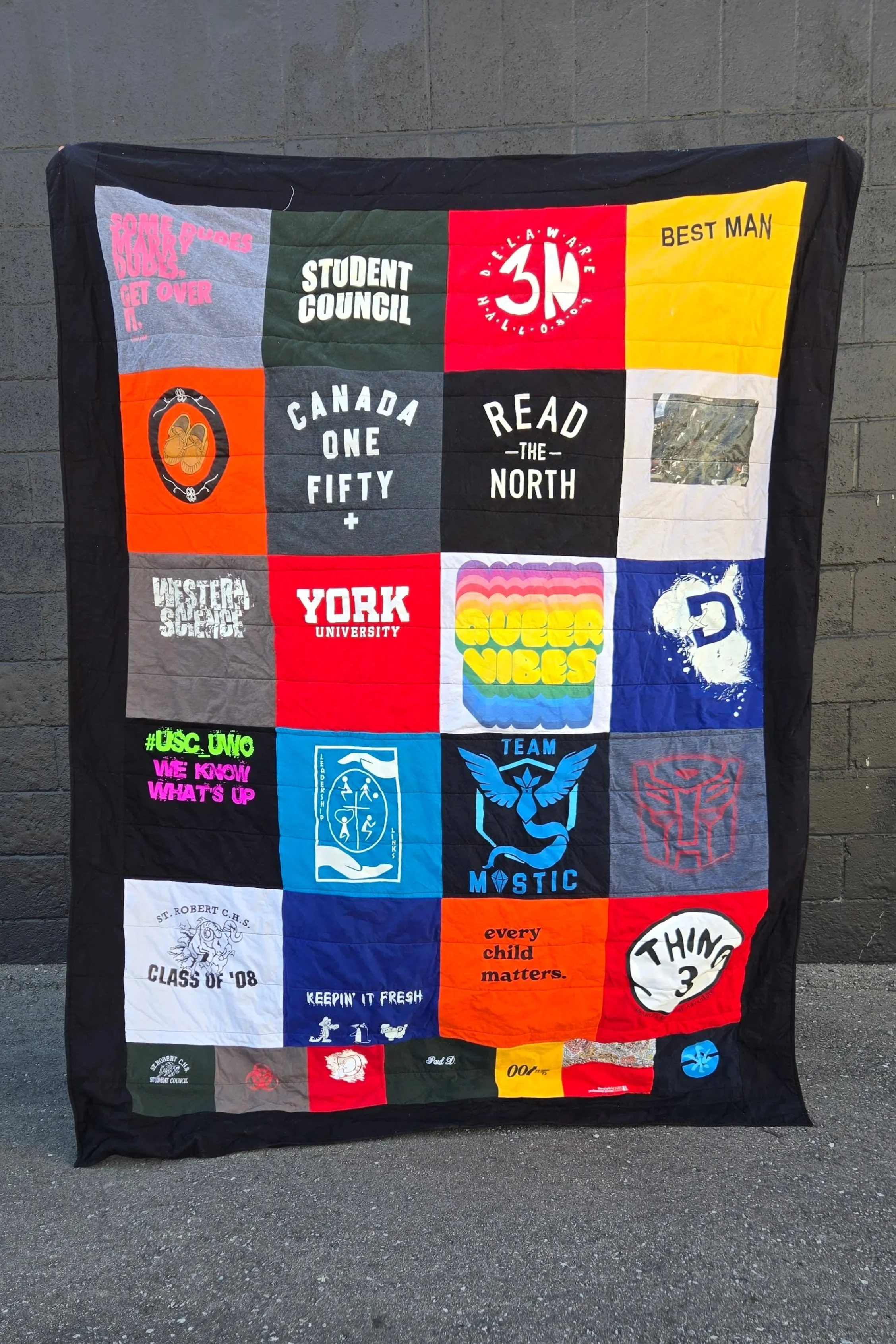
This quilt has a 5” black border and a black binding
The Binding
Binding is the finishing touch on a quilt. All quilts have a binding. It’s a long thin strip of fabric that wraps around the raw edges of the quilt, so they don’t fray. It protects the edges and gives the quilt a clean, polished look.
Binding can be simple and subtle to blend in, or bold and colorful to add an extra pop to the design.
We use a black binding in all of our T-Shirt quilts, unless discussed otherwise.
This quilt has a black binding
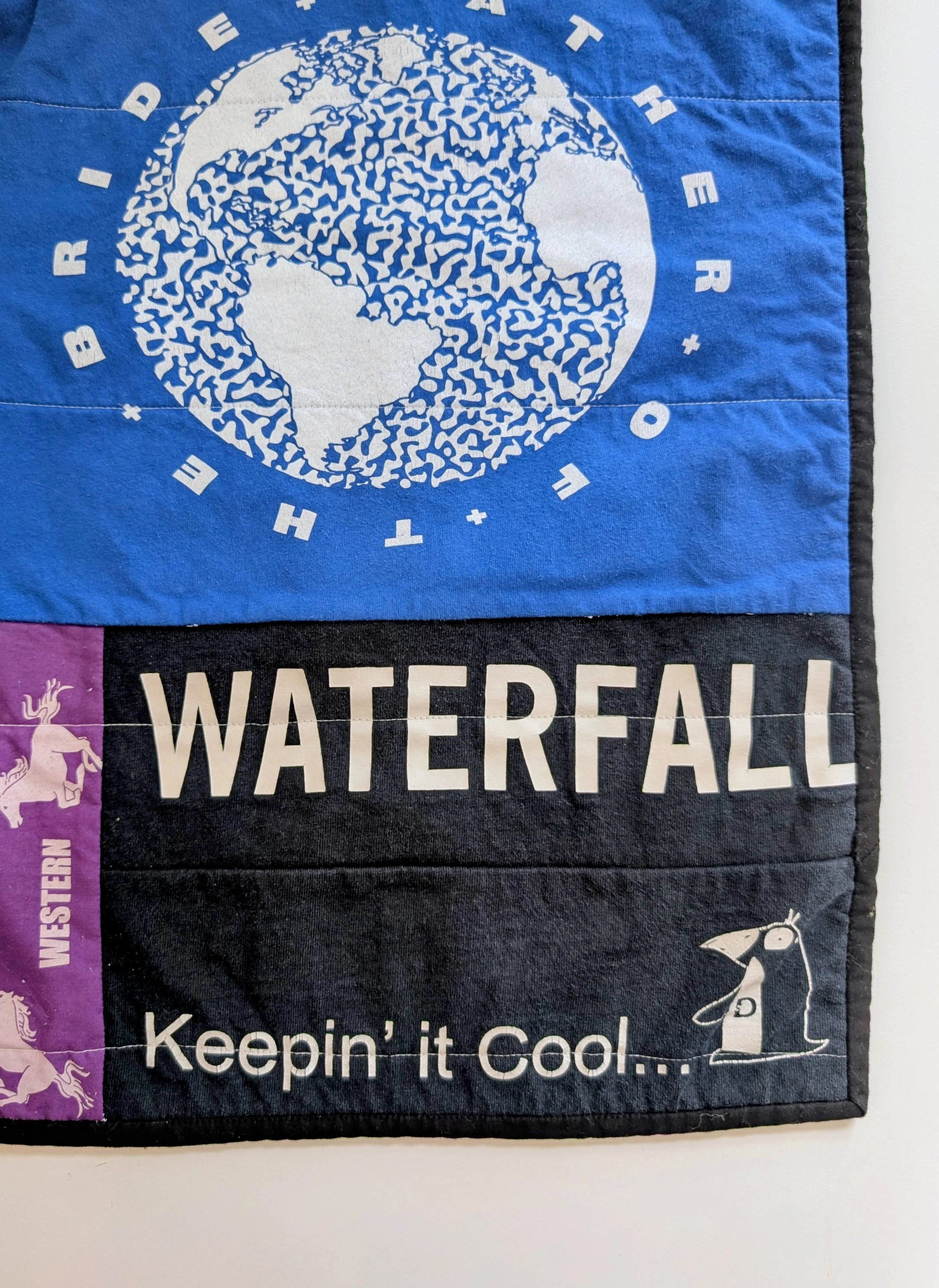
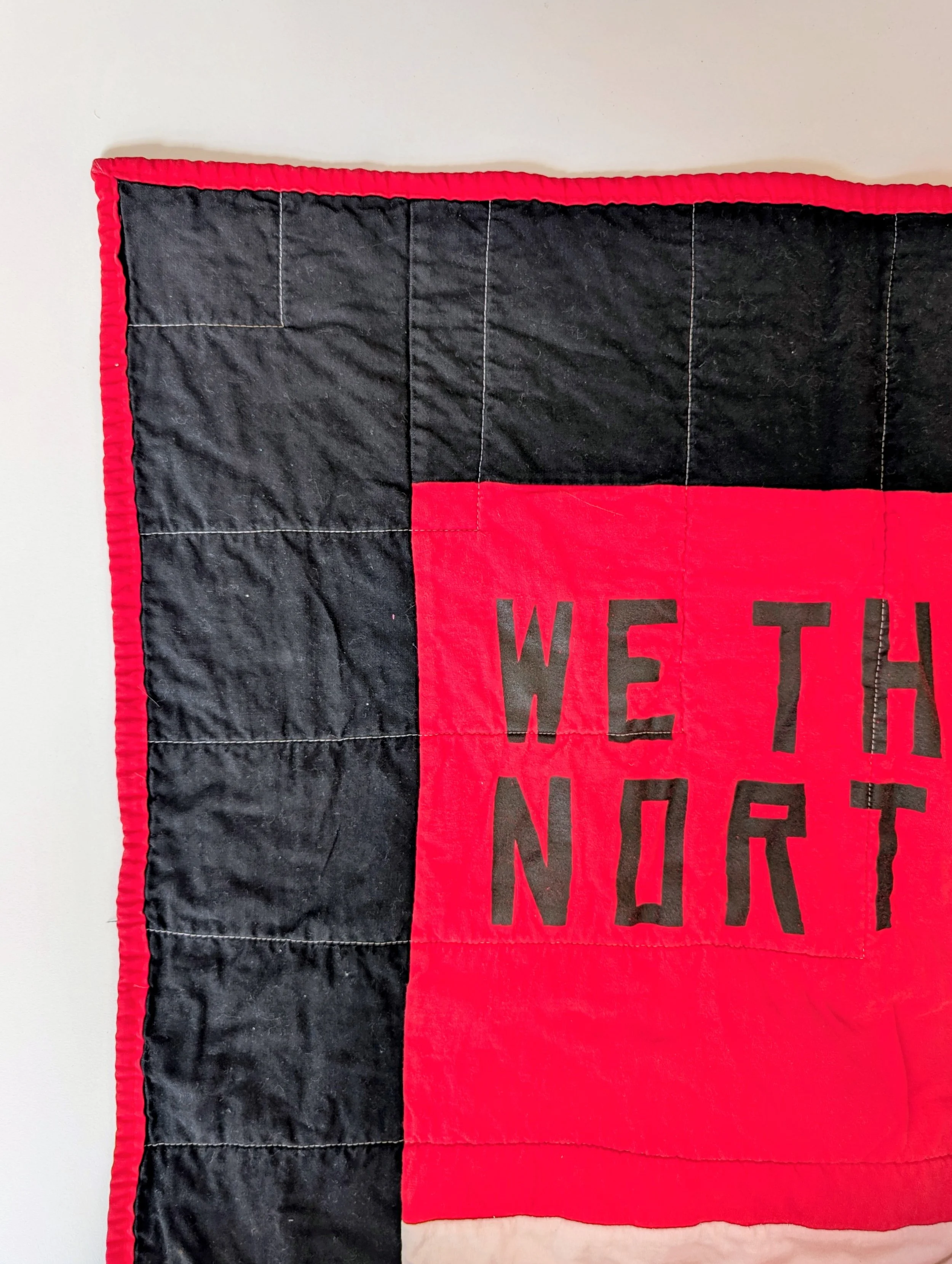
This quilt has a red binding
The Quilt Back
The back of the quilt (referred to as “the backing”) is usually one large piece of fabric. It’s not what people first see in a quilt, but it can still add to the art of it. Quilt backings can be simple and solid, patterned to complement the top, or even pieced together from extra fabric. It’s often the part that touches you when you’re snuggled up under the quilt.
As a small business, I don’t stock backing fabrics, so I can work with you if there is something specific you’d like. The base price of the quilt includes a solid black cotton. Using a solid color allows me to make your quilt faster as there will not be any back and forth between us. If choosing something other than black, I will do my best to choose the shade of your choosing, but please note, this will increase the cost as I have to source it.
If you choose to source a patterned fabric, please note that I only work with 100% cotton, and cannot guarantee the quality of brands that I'm not familiar with. You are welcome to browse online Canadian fabric suppliers and order through one of them. I can provide you with the amount of fabric needed, and you can ship it to my studio. This will add time to the production of your quilt, and will alter the price of your quilt. We will discuss this in the initial stages of planning your quilt.
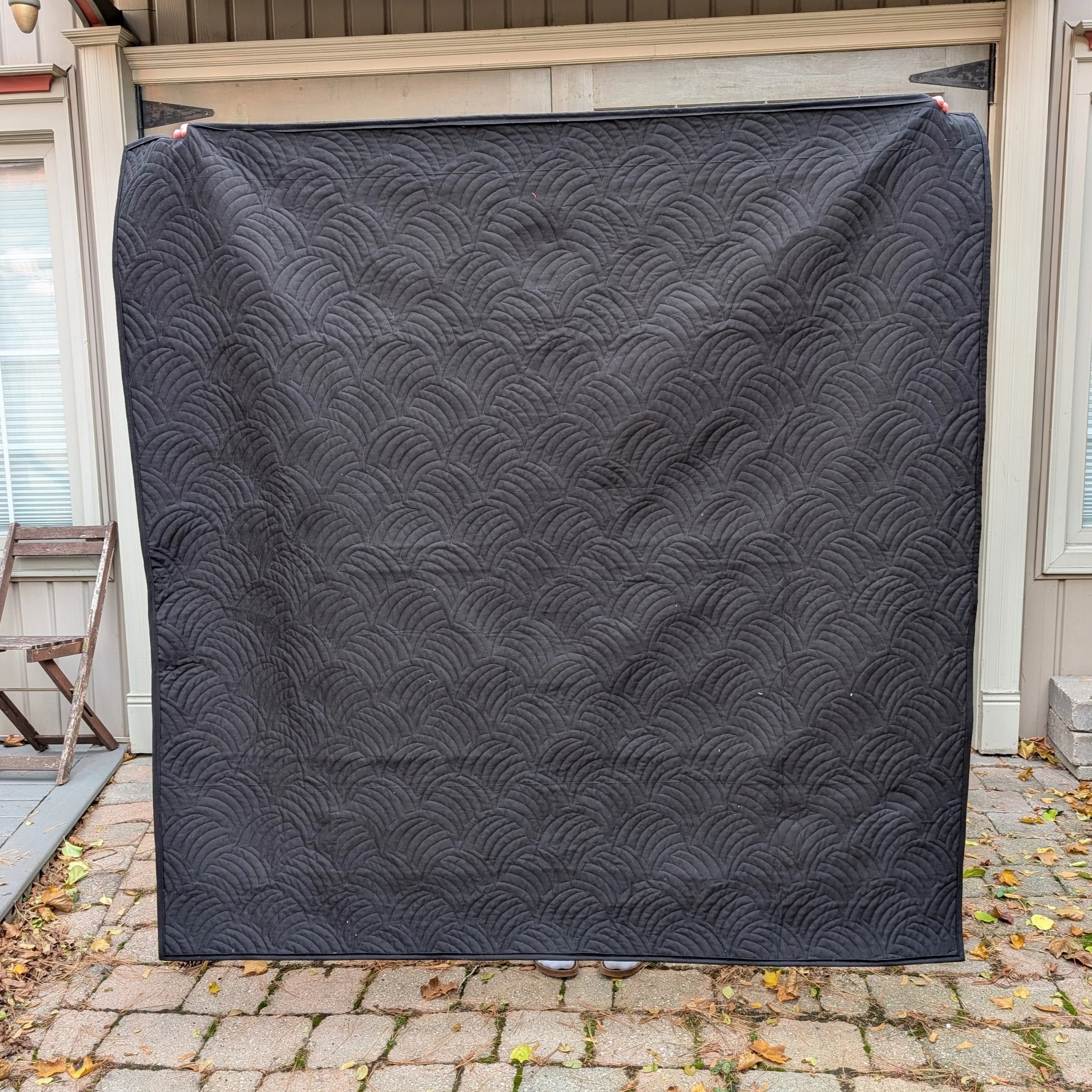
This quilt has a solid black backing
The Quilt Middle
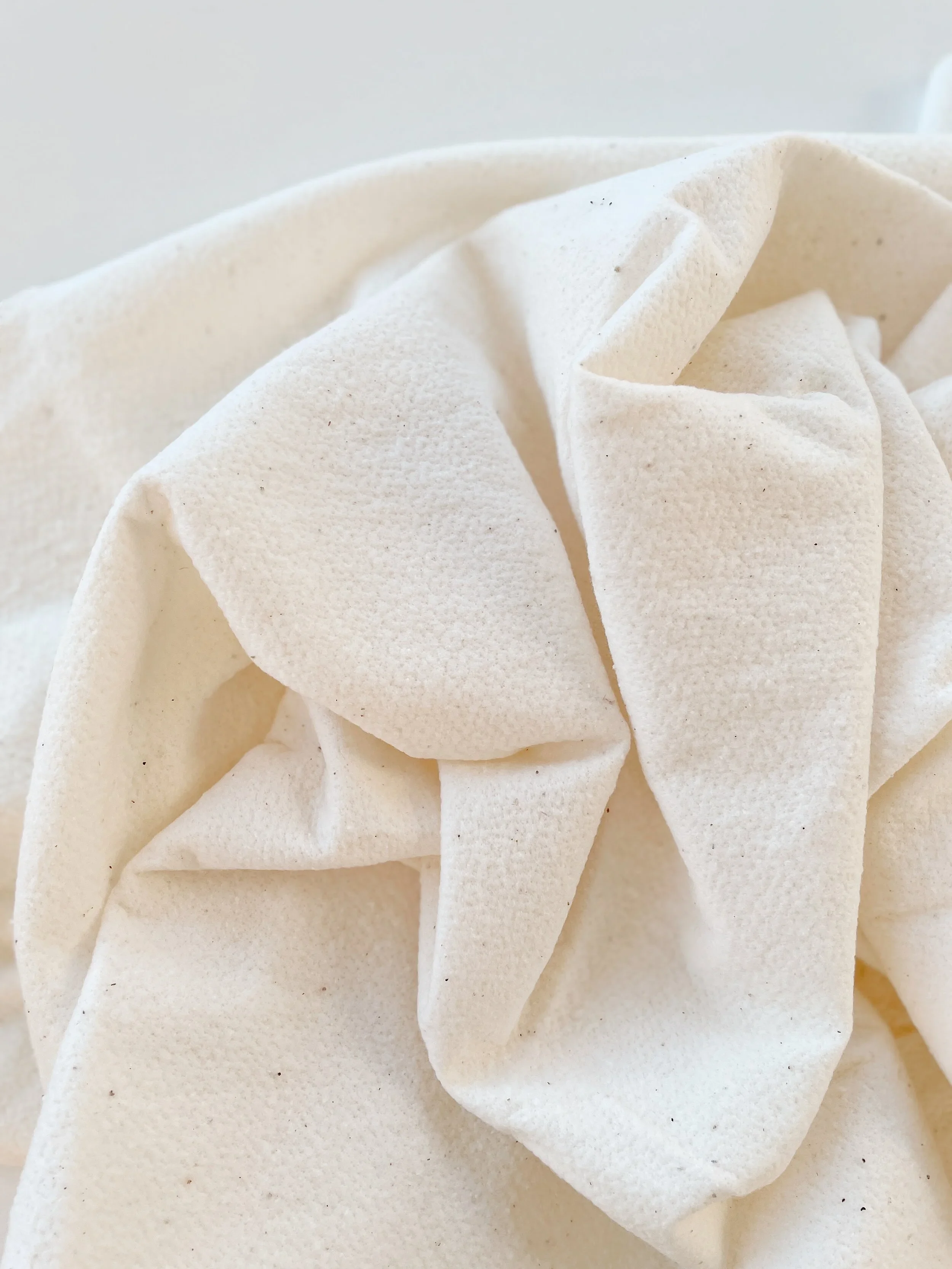
The middle of the quilt is the part of the quilt sandwich that you won’t see. It gives the quilt it’s warmth and it’s thickness. The technical name is “batting”. Batting can be made from different materials, like cotton, polyester, bamboo, or wool, each giving a slightly different feel. Thinner batting makes a lightweight quilt, while thicker batting makes it warmer and puffier.
I use high quality 80/20 batting. It is 80% cotton and 20% polyester batting. It shrinks less than 100% cotton batting and is more durable. If you would like me to use something other than 80/20 batting, please be sure to mention this.
The Quilting
The act of quilting means sewing the 3 layers together.
These stitches don’t just hold the layers in place, they also add texture and design to the finished quilt.
There are a few different ways quilting can be done:
Machine Quilting – A sewing machine is used to stitch the layers together. This is faster than hand quilting and can be done with simple straight lines or more intricate patterns.
Longarm Quilting – A specialized, large sewing machine, called a longarm is used to quilt big designs over the entire quilt. It’s great for detailed patterns and finishing larger quilts.
Each method creates a different look and feel, but all count as “quilting.”
At Quilted Stories, we exclusively straight line, machine quilt on a domestic sewing machine.
If you would like it to be “Longarmed” instead, I can send it off to a local longarmer to do that part of the process. This can add 4-6 weeks to the delivery time as I outsource this. It adds between $50-$200 to production cost, depending on size of the quilt.
Check out this blog post where I go further into the differences.
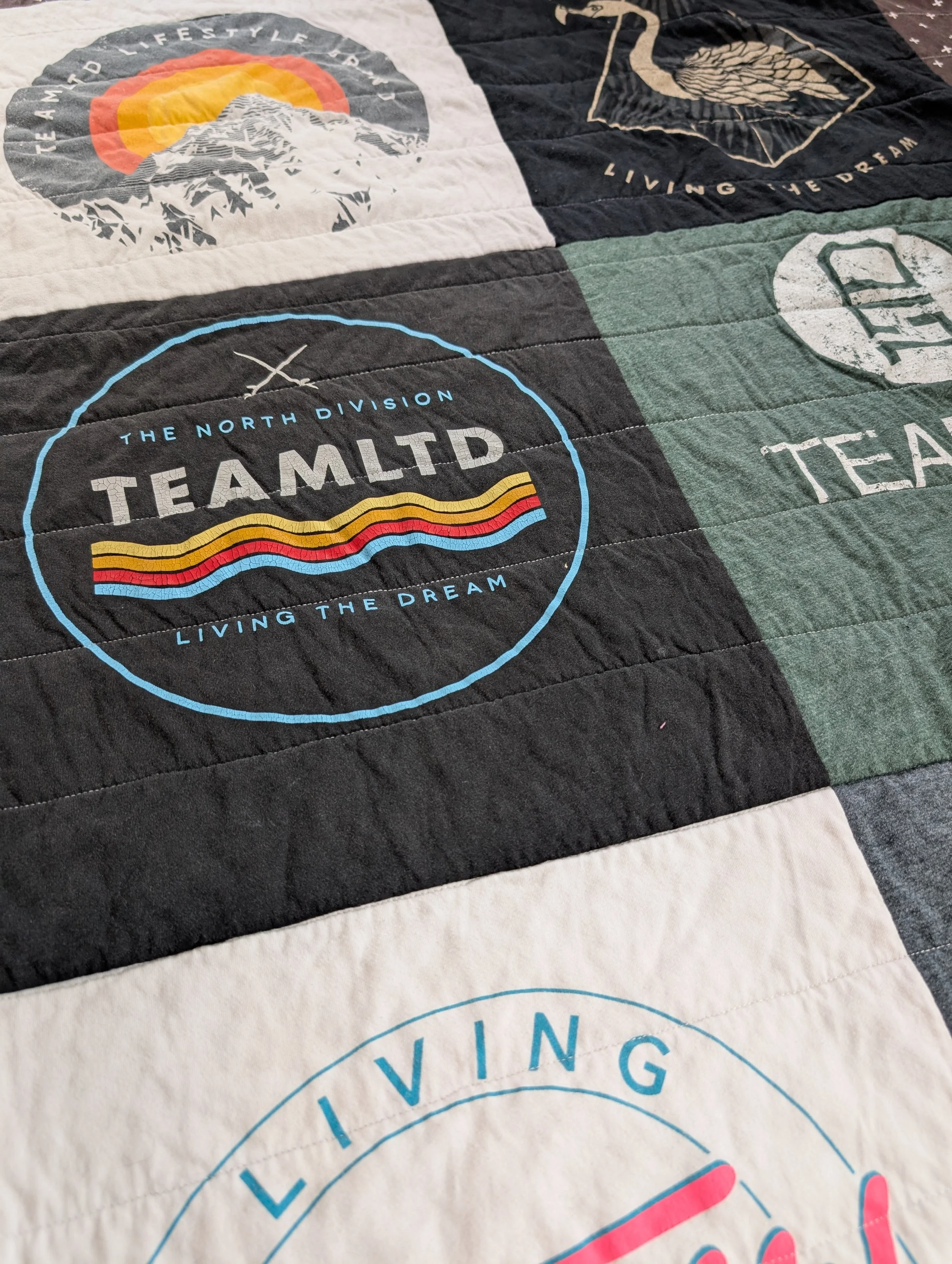
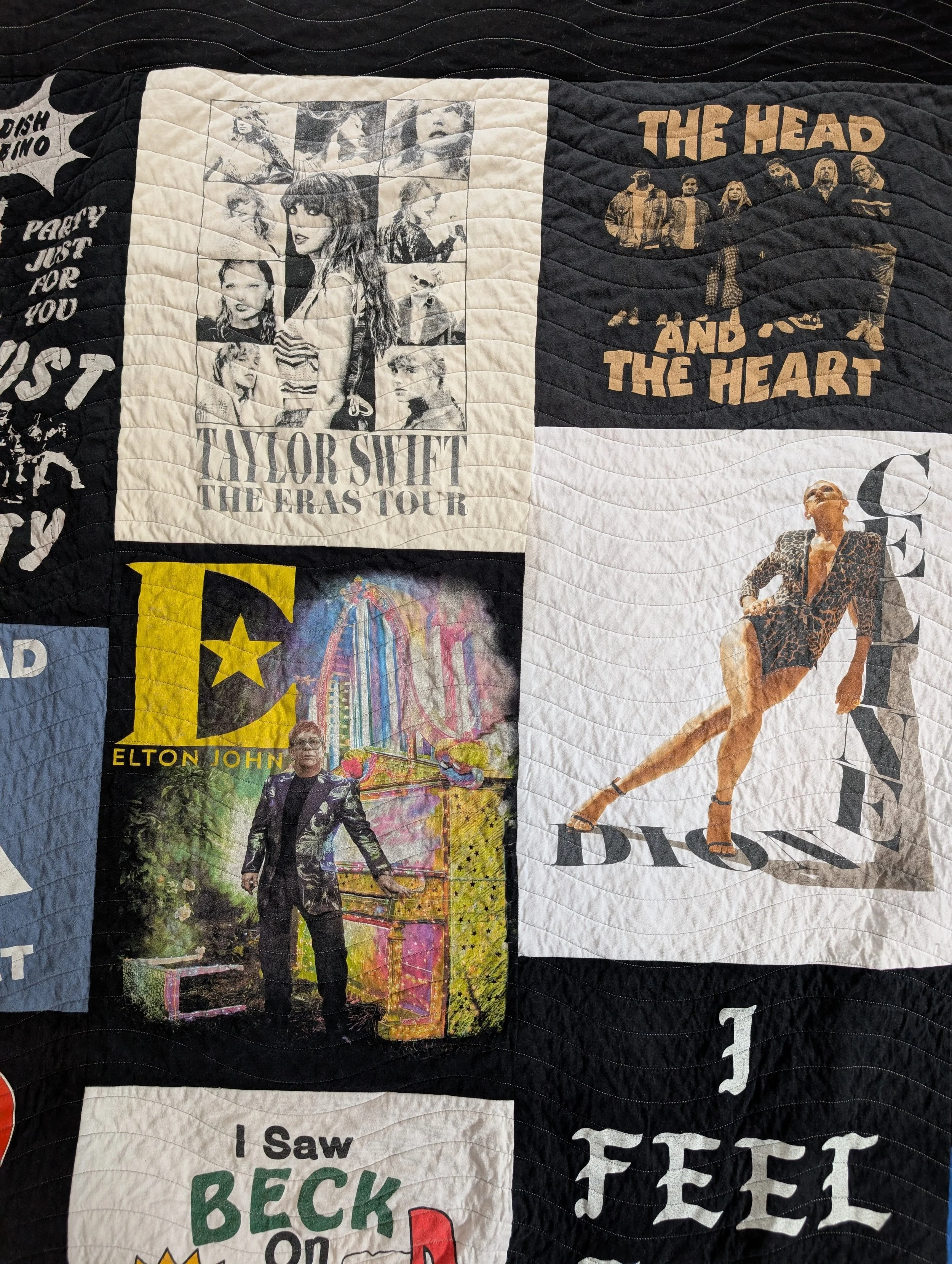
This quilt has been straight line quilted
This quilt has been quilted on a longarm machine